
-
Email
rankmysite@forza-digitales.com -
Phone
+1 (307) 301-7657 -
Address
5830 East 2nd Street,
82609 Casper, WY
USA
Crawl Efficiency and Structural Clarity
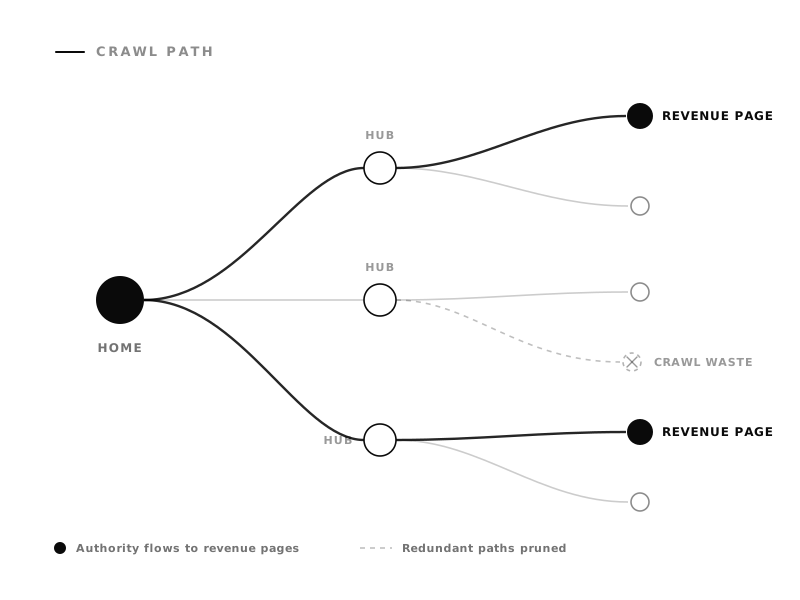
Google allocates finite crawl resources to every domain. When architecture is messy or inconsistent, those resources are wasted on redundant URLs, broken internal pathways, and low-value templates.
We address crawl issues at the root. Internal linking is refined so authority flows toward revenue-driving pages, hierarchies are simplified to prevent depth dilution, redirect chains are removed, and sitemaps are rebuilt to reflect strategic intent rather than legacy clutter.
The impact is measurable. When Google can consistently access and interpret priority pages, indexation stabilizes and ranking responsiveness improves. Crawl efficiency isn't visible to users — it's visible in the performance curve.
- Internal linking refined
- URL hierarchy simplified
- Redirect chains eliminated
- Sitemaps rebuilt
Indexation Control and Authority Consolidation
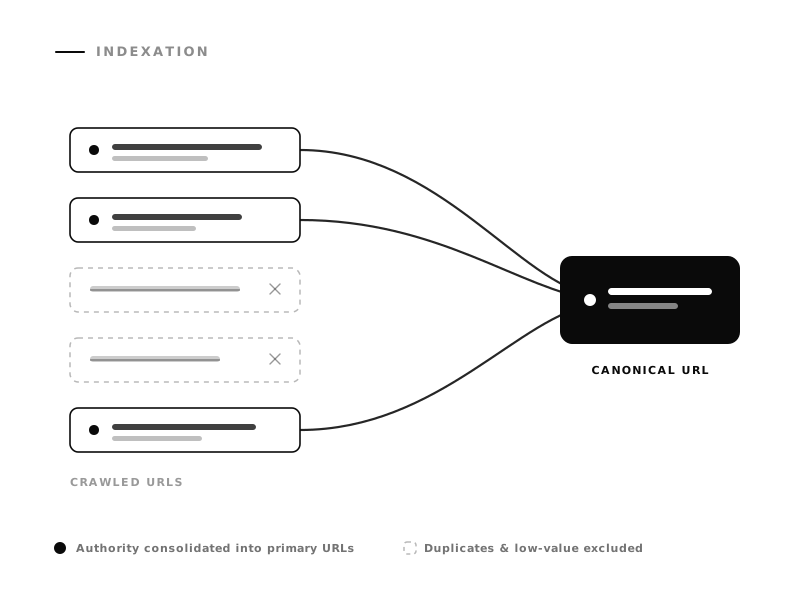
Indexation determines which pages are eligible to rank — and many sites carry inconsistencies that go undetected until performance drops. Commercial pages get excluded inadvertently, duplicates compete internally, canonical signals conflict across templates, and parameterized URLs expand without control.
We enforce a deliberate indexation strategy. High-value pages stay fully accessible and prioritized, low-value or duplicate pages are excluded, and canonicalization is clarified to consolidate authority into primary URLs.
This consolidation increases ranking precision. Instead of fragmenting signals across versions, authority accumulates in the pages that convert. Revenue growth depends on visibility for the right pages — not just more pages.
- Index coverage corrected
- Duplicates de-conflicted
- Canonicals clarified
- Authority consolidated
More on Technical SEO

How Technical SEO Impacts Revenue Growth
Revenue driven SEO begins with infrastructure. Without crawl efficiency, site health and correct indexation, growth will always plateau…
Read article
The Full Blueprint to Crafting a Memorable and Impactful Brand That Stands the Test
Comfortable full leather lining eye-catching unique detail to the toe low ‘cut-away’ sides clean and sleek harmony. Adamson…
Read article
How Leading Brands Build Emotional Connections Through Thoughtful Storytelling
Comfortable full leather lining eye-catching unique detail to the toe low ‘cut-away’ sides clean and sleek harmony. Adamson…
Read article